Multi-stump grinding and light land clearing in the HRM
“Land clearing” means different things to different callers. Some want a backyard of leftover stumps gone so the lawn reads as one surface again. Others are preparing a building pad and need organics out of the structural envelope. This page separates batch stump grinding from excavator grubbing so Halifax property owners do not buy the wrong scope.
When batch grinding is the right tool
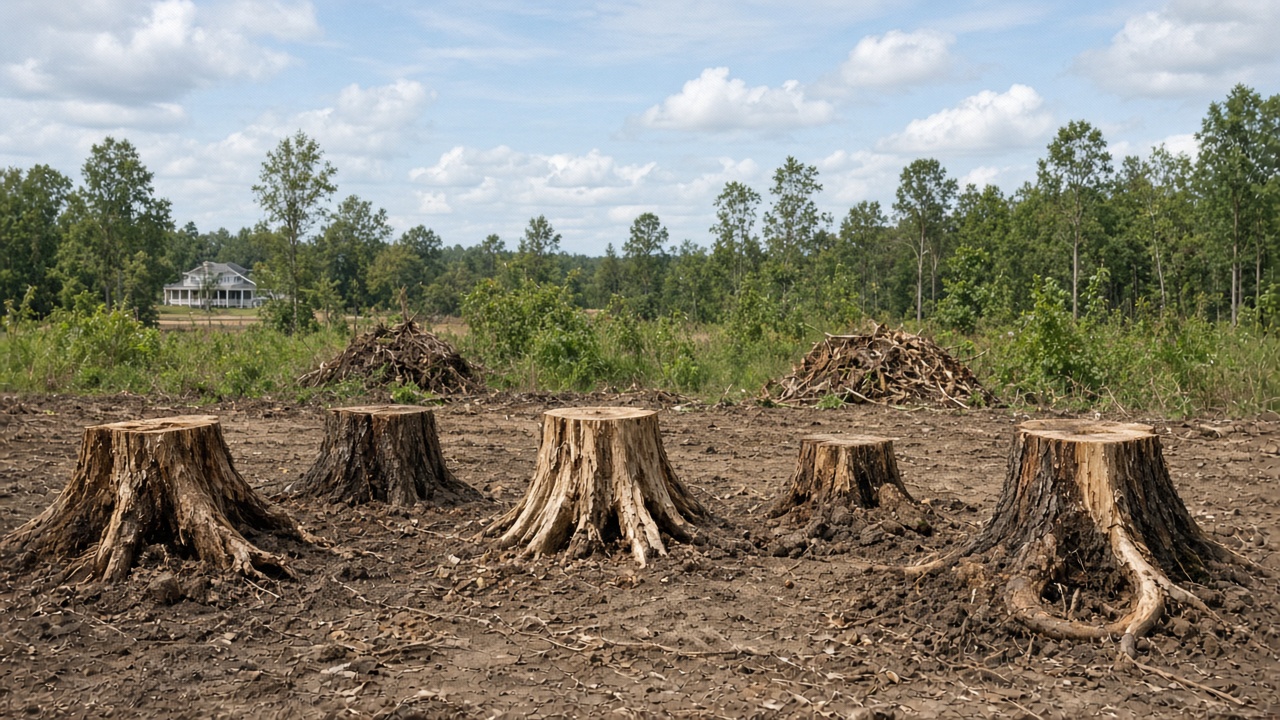
After a property clear, storm cleanup, or a line of trees removed for light and views, several stumps may share one mobilization. Pricing often looks more like a package than a simple per-stump menu. Grinders reclaim mowable grade and reduce trip hazards across the lot. Chipping brush the same day can leave the site walkable sooner.
When excavators belong on site
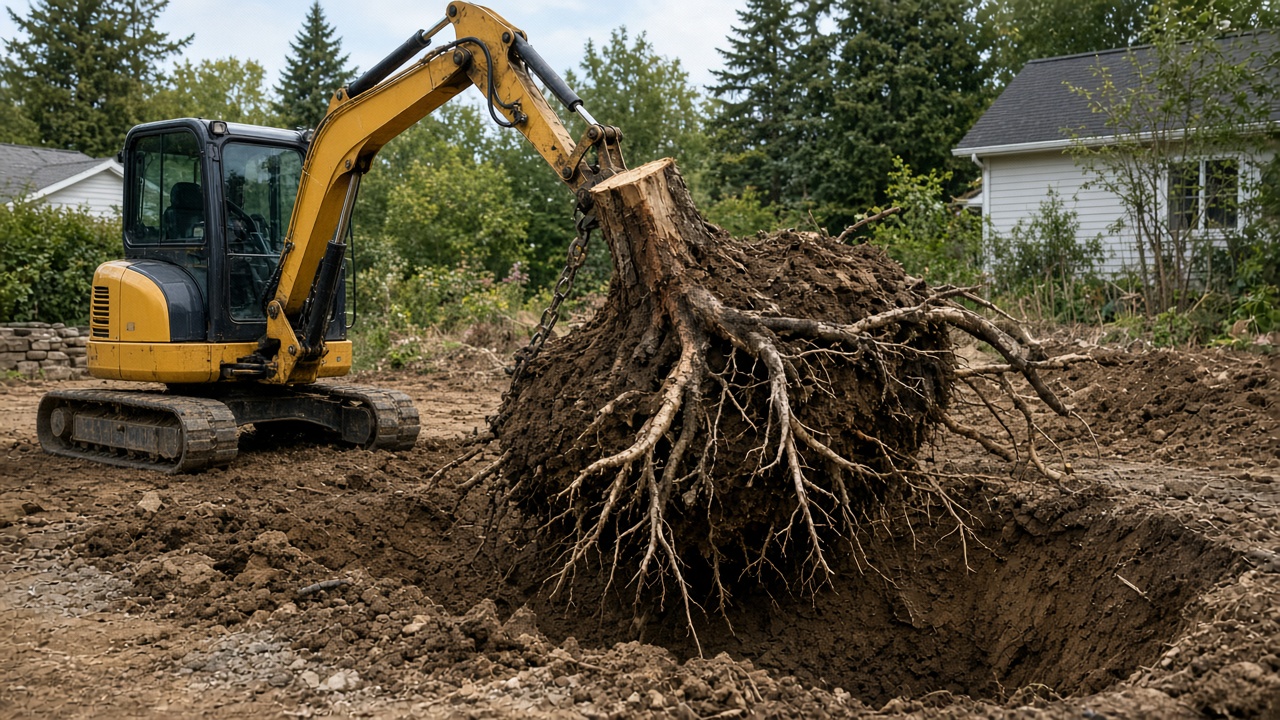
House pads, barn slabs, and driveway corridors generally need stumps and major roots pulled. Grinding leaves wood that can settle for years. Public construction threads are blunt: organics under concrete are a future crack. Forestry mulching alone is not the same as clearing for construction—roots remain until someone rakes or digs them.
- Pad footprint: excavate and compact proper fill
- Yard outside the pad: grinding or mulching may be enough
- Grass soon: budget root raking and grading after mulch/grind
Halifax neighbour and access realities
HRM lots near shared fences need insured crews, clear drop plans, and honest talk about lawn recovery. Reddit locals warn about uninsured cutters. Ask for proof of insurance. Measure access for both felling equipment and the grinder that follows.
Pricing shape for multi-stump work
Ten-plus stumps are often priced as a job, not a stack of independent per-stump rates. Mobilization, machine size, haul volume, and whether excavation is mixed in dominate the quote. Ask for those line items in writing.
Chipping as a companion service
Brush piles after felling are a separate hazard. On-site chipping can turn them into mulch you keep or material you haul. Bundling chip and grind often produces a cleaner handoff to landscaping.
See also stump grinding and mulch options.
Defining scope before anyone cuts
Write down the goal: mowable yard, view corridor, garden expansion, driveway, shed pad, or house foundation. Each goal implies a different organic-removal standard. A view corridor can often stay as grind-and-chip. A foundation cannot. Mixing goals on one verbal handshake is how budgets blow up mid-job.
Sequencing felling, chipping, and grinding
Large clearing jobs often fell and chip first, then return for stumps—or run a second machine the same week. Leaving stumps for “later” is fine if the ground stays accessible and you accept temporary hazards. If equipment will drive the corridor repeatedly, flush cuts and temporary fill may still be bumpy; grinding or pulling sooner reduces that pain.
Environmental and neighbour considerations
HRM properties near watercourses, steep slopes, or protected public trees need extra checks. Do not assume a private clear allows disturbance of municipal trees or shoreland buffers. Talk to neighbours before loud multi-day equipment work. Dust, chip blow, and temporary driveway blockage are predictable frictions—plan parking and chip staging.
Debris destinations
Logs may go to firewood, mills, or haul-away. Brush becomes chips. Stumps become grindings or excavated root balls that many ordinary compost sites reject. Confirm disposal paths in the quote. Burning stumps is heavily restricted in urban HRM contexts and is not a default recommendation on this site.
Hybrid scopes that save money
A practical pattern from clearing discussions: excavate only where the building and driveway sit; grind or mulch the remainder of the lot. That hybrid keeps structural envelopes clean without paying excavator rates across every ornamental stump at the property edge. Draw the footprint on a sketch and price the two zones separately.
- Zone A — pad and driveway: pull stumps, compact fill
- Zone B — yard: grind, rake, optional seed
- Zone C — wooded edge: leave or selective thin
Mobilization economics
Moving grinders and excavators costs real money. Grouping stump work with chipping and felling on adjacent days reduces repeat mobilizations. Ask early about travel for communities farther from Halifax.
Storm cleanup vs planned clearing
After a Nor’easter or hurricane leftover, priorities are safety and access. Grinders may wait until hangers and brush are cleared. Planned clearing for a build has the opposite rhythm: survey, mark pads, pull organics in the footprint, then finish yards. Do not let emergency energy push you into grinding under a future foundation “just to tidy.”
Working with surveyors and builders
If a builder is involved, share the clearing plan early. Site supervisors hate discovering stumps under a proposed driveway after forms are ordered. Provide a sketch with stump counts and species guesses. Ask whether the builder’s earthworks crew will pull stumps cheaper as part of mass excavation—sometimes the stump grinder is only needed outside the cut.
Erosion and bare soil
Clearing that leaves bare till on a slope invites washouts into neighbours’ yards and municipal drains. Temporary seeding, silt fencing, or mulch blankets may be required by good practice even when not formally permitted. Budget restoration, not only cutting. Grindings can help cover bare spots short term if they will not wash into streams.
Selecting contractors for mixed scopes
Some firms only grind. Some only excavate. Some do both. For hybrid jobs, either hire a generalist or accept two schedules and two invoices. Clarity beats the cheapest single number that quietly excludes the pad excavation you actually need.
Checklist before you book clearing
- Sketch zones: pad, driveway, yard, leave-wooded
- Count stumps and note diameters at grade
- Decide chip and log destinations
- Confirm public-tree and neighbour constraints
- Ask whether excavator days are included or referred
- Require insurance proof and a written scope
With that package ready, quotes become comparable. Without it, every contractor invents a different job—and you pay for the confusion later.
Summary for HRM property owners
Multi-stump grinding shines for reclaiming yards. Excavation shines for structures. Hybrid scopes often win on cost when you draw zones on a sketch. Confirm insurance, disposal, and whether chipping is bundled. With those answers, you can compare Halifax-area quotes without guessing what “cleared” means.
Record keeping for permits and builds
Keep quotes, insurance certificates, before-and-after photos, and a simple map of what was ground versus excavated. Builders, lenders, and future buyers may ask what organics remain under a yard. Good records turn a messy clearing season into a clear property history.
When you are ready, call with the zone sketch and stump photos so the estimate matches the property you actually own—not a generic acreage assumption.
Land clearing FAQs
For a house pad, should I mulch or grind stumps or use an excavator?
Building pads generally need stumps and major roots dug out so organics do not settle under the foundation. Mulching or grinding is more appropriate outside the structural footprint.
Is forestry mulching the same as clearing land?
Mulching clears above-grade biomass; roots often remain. Root-raking or excavation is needed for a bare, plantable or buildable grade.
I have many old stumps on a future barn site — grind or pull?
Pull or excavate and backfill for structures; grinding leaves wood that can create dips later.
How do pros price multi-stump clearing vs per stump?
Multiple stumps usually share mobilization and may be bid as a package or day rate rather than simple per-stump math.
What’s the cheapest way to clear a treed acre for construction?
Heavy equipment that fells and pulls stumps is typically fastest for build-ready sites; DIY chainsaw plus later grind leaves structural risk if stumps stay under the pad.
Do I need root raking after grinding a cleared lot?
If you want grass soon, root raking and grading after mulching or grinding helps; otherwise regrowth and uneven grade are common.
Can stump grinding alone prep a driveway corridor?
Not ideally — pull organics along the corridor and rebuild with compacted aggregate.
We’re clearing near a neighbour’s house in Halifax — what matters?
Hire insured crews experienced with tight drops and property lines; grinding after felling still needs clear access agreements.
Should brush chipping be bundled with stump grinding?
Often yes for a walkable site the same day — chipping and grinding can be standalone or combined.
How many stumps make hiring better than renting?
Rough rule from DIYers: many small stumps can favour a rental day; one or two large stumps usually favour a pro visit.